Article: How an Alcohol Breathalyzer Works: Understanding the Three Types of Technologies
How an Alcohol Breathalyzer Works: Understanding the Three Types of Technologies
4 min read
Understanding the science behind breath testing may help you make more informed decisions about which solution to choose and how to incorporate voluntary alcohol testing into your life.
Key Takeaways
- Alcohol breathalyzers estimate intoxication by measuring alcohol in your breath, which closely correlates with blood alcohol content (BAC).
- Each type of personal alcohol breathalyzer works differently, and sensor technology affects accuracy and reliability.
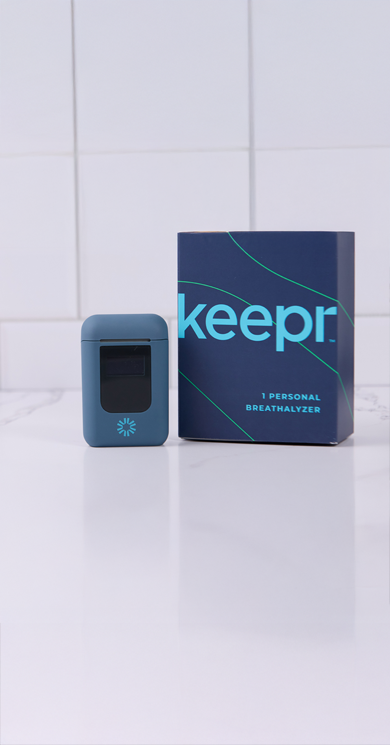
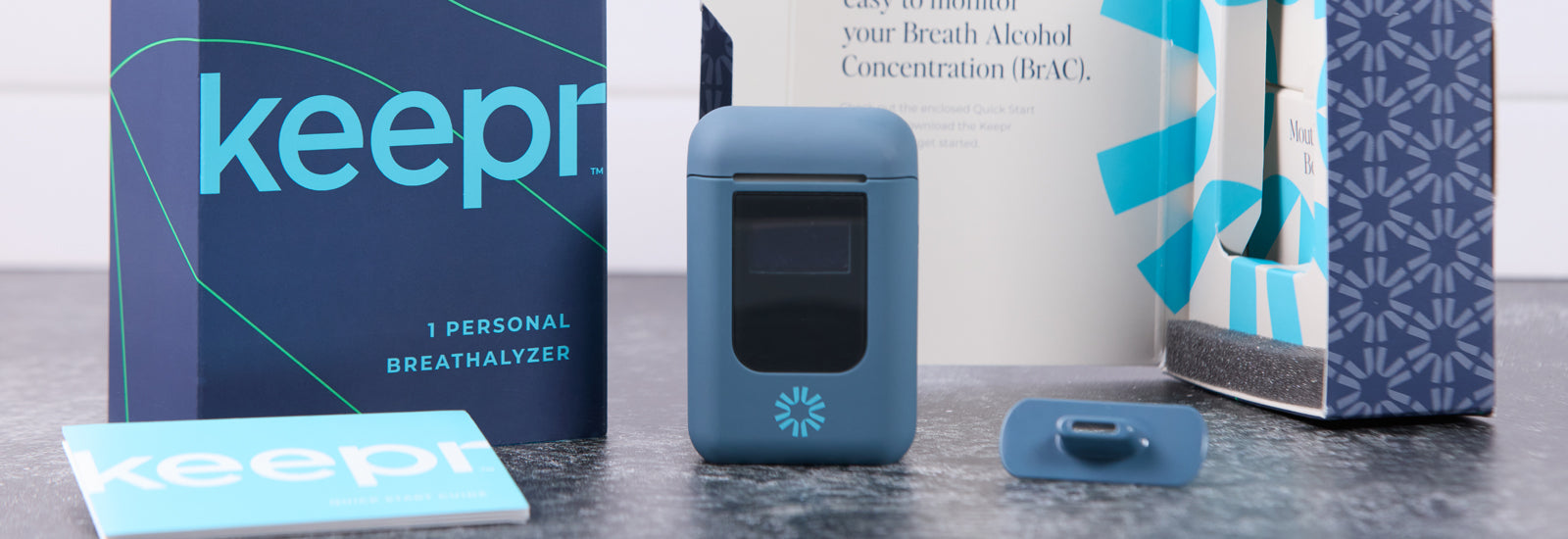
- Fuel-cell breathalyzers like Keepr® strike a balance between scientific precision, portability, and affordability for personal use.
An alcohol breathalyzer may seem like a straightforward tool. You blow into the device and get a number. That number then determines whether the breathalyzer will allow your car to start. This is the case for regulated ignition interlock devices (IIDs), a type of breathalyzer that is usually court-ordered when someone is convicted of a driving under the influence charge.
But what about if you're exploring integrating a voluntary personal alcohol breathalyzer into your life? How does a breathalyzer work when you're choosing to use this tool and how might it help you make informed decisions about driving?
Here, we explore how your body processes alcohol, and why different breathalyzer technologies may produce different results. Understanding these fundamentals is especially important if you're required to install an ignition interlock device (IID) or you're choosing to use a personal breathalyzer like Keepr® voluntarily.
This blog is for informational purposes only; it is not to be used as legal advice. Always consult a qualified DUI attorney if you have questions related to impaired driving. For immediate assistance with personal breathalyzers, call Keepr at (833) 743-5969.
How the Body Metabolizes Alcohol
Alcohol absorption begins almost immediately after consumption, and you absorb around 20% in the stomach, with the remainder entering the bloodstream through the small intestine. From there, it circulates throughout the body, including making its way to your brain and lungs.
The liver metabolizes most alcohol at a relatively fixed rate, which is roughly 0.015% BAC per hour for the average adult. However, factors such as your body mass, sex, hydration, food intake, and genetics can influence how quickly you metabolize alcohol. The key takeaway for anyone who drinks, though, is that time is the only reliable way to sober up.
As alcohol circulates in the bloodstream, a portion diffuses into the air sacs (alveoli) of the lungs. When you exhale, trace amounts of alcohol vapor leave your body, and this is what breathalyzers measure
Blood Alcohol Content (BAC) vs. Breath Alcohol Concentration (BrAC)
BAC refers to the percentage of alcohol in your blood, while breath alcohol concentration (BrAC) measures alcohol in your breath, expressed as milligrams per liter. So, how does a breathalyzer work?
Breathalyzers rely on a scientifically established ratio of approximately 2100:1, meaning that 2,100 milliliters of breath contain about the same amount of alcohol as 1 milliliter of blood. While this isn't a perfect correlation, it's strong enough to support an accurate estimate when you use proper sensor technology.
How Does a Breathalyzer Work: Three Types of Technology
Not all breathalyzers are created equal, and their accuracy depends heavily on how each device detects alcohol. If you're wondering how does a breathalyzer work, it depends on the type of technology. Modern alcohol breathalyzers typically fall into three categories: semiconductor sensors, fuel-cell sensors, and infrared spectroscopy.
1. Semiconductor Sensor Breathalyzers
How It Works: Semiconductor sensors use a tin oxide material that provides electrical resistance changes when exposed to alcohol vapor. The sensor interprets this change as an estimate of the alcohol level.
Advantages:
- Typically low cost
- Small size and lightweight design
- Wide availability
Disadvantages:
- Potential degradation in accuracy over time
- Frequent recalibration
- Lack of selectivity, which can cause them to react to substances like acetone or mouthwash.
Semiconductor sensors respond to a broad range of volatile compounds, which can be prone to contaminated and/or inconsistent readings.
2. Fuel-Cell Breathalyzers
How it Works: Fuel-cell breathalyzers rely on an electrochemical reaction. Once alcohol molecules contact the fuel cell, they oxidize, producing an electrical current proportional to the amount of alcohol present. This reaction is highly specific to ethanol, which makes fuel-cell sensors more reliable than semiconductor alternatives.
Advantages:
- Highly specific to alcohol, not other compounds
- Consistent accuracy over time
- Used in professional-grade and law-enforcement devices
Disadvantages:
- Higher cost when compared to semiconductor sensors
- Slightly larger components
Fuel-cell technology is widely considered the gold standard for portable breathalyzers due to an excellent balance of precision and usability.
3. Infrared Breathalyzers
How it Works: Infrared (IR) breathalyzers use light absorption to identify alcohol molecules. Since different compounds absorb infrared light at specific wavelengths, this allows for extremely precise measurement.
Advantages:
- Exceptional accuracy
- Minimal interference from other substances
Disadvantages:
- Expensive
- Bulky
- Non-portable
They're typically used only in police stations or laboratories. While infrared devices are highly accurate, they're impractical for everyday personal use.
Keepr: The Sweet Spot for Personal Breathalyzers
Mindr, a company with deep roots in fuel-cell technology and sensor engineering, developed Keepr. Drawing on years of experience building reliable, purpose-driven detection tools, Mindr designed Keepr to fill a critical gap: a personal portable alcohol breathalyzer that delivers verifiable results without unnecessary complexity or cost.
Unlike semiconductor-based devices, Keepr's fuel-cell technology provides consistent, ethanol-specific BrAC readings you can trust. Unlike infrared systems, it's compact enough to fit into daily life. This makes it a practical choice if you're trying to make smarter, more responsible drinking decisions.
Keepr represents the optimal balance of accuracy rooted in fuel-cell science and reliability proven through stable sensor performance. Its portability is designed for real-world use, so you can take it with you wherever you go and feel confident you're making safe choices.
How does a breathalyzer work, and what makes Keepr different? Ready to learn how it compares to other alcohol breathalyzers, and why fuel-cell technology matters? Explore Keepr today and see why it's a trusted solution for personal breath testing at YourKeepr.com.